

Table of Contents
- Why High End Garden Furniture Pays You Back
- High-End vs Budget Garden Furniture: The Real Cost Difference
- Durable Garden Furniture Materials That Earn Their Keep
- How Long Does Garden Furniture Last When It's Built Properly?
- How to Care for Luxury Garden Furniture Through Every Season
- The Drawbacks of Investing in High End Garden Furniture
- Frequently Asked Questions
Last Updated: 19 October 2026
Why High End Garden Furniture Pays You Back
High end garden furniture is outdoor furniture built from premium materials and joinery to a standard that lets it stay outside year after year, rather than being stored away and replaced every few summers. At Elite Garden Furniture, we have watched the same pattern play out for years: buyers spend modestly, replace the set within two or three seasons, and end up spending more than they would have on one properly made collection. The maths is not complicated. It is the psychology that trips people up.
A cheap set feels like the safe choice because the outlay is smaller today. But furniture is one of the few purchases where the cheapest option is almost always the most expensive over time. Below, we break down what your money actually buys, which materials hold up, how long a well-built piece should last, and the honest drawbacks nobody mentions before you commit.
High-End vs Budget Garden Furniture: The Real Cost Difference
The real cost difference between high-end and budget garden furniture is not the sticker price, it is the cost per year of use. A budget set that lasts three summers and a premium set that lasts fifteen are not competing on price at all. They are competing on how many times you have to buy.
What Your Money Actually Buys
What you pay for in premium furniture is material grade, joinery, and finish. A budget chair is typically softwood or thin aluminium with stapled joints and a sprayed-on coating that fails first. A properly made piece uses kiln-dried hardwood, solid brass or stainless fixings, and a finish applied to survive weather rather than just look good in a showroom. That is the whole difference, and it is invisible until year three.
The Replacement Cycle Trap
The replacement cycle trap is simple: cheap furniture fails before it has paid for itself. You buy, you replace, you buy again, and each cycle resets the clock. Many households replace their garden seating several times over a decade without ever adding up the total. When they do, the number is usually higher than a single premium purchase would have been.
Durable Garden Furniture Materials That Earn Their Keep
Durable garden furniture materials are those that resist moisture, UV, and temperature swings without losing structural integrity. The two families that consistently earn their keep are dense hardwoods and properly finished metals. Everything else is a compromise.
Teak and Hardwoods
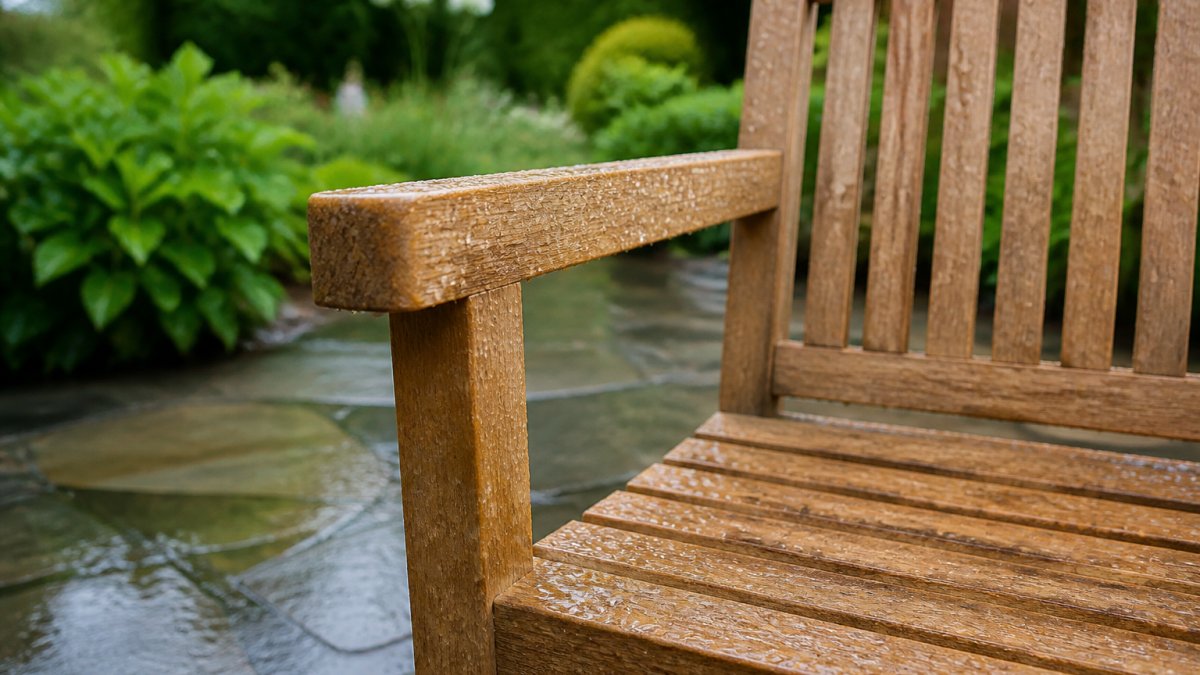
Teak is the benchmark for a reason. Its natural oils make it resistant to rot and insect attack, and it weathers to a soft silver-grey rather than splintering. Look at the Barlow Tyrie Ascot Teak Chair, a folding dining chair with a solid brass locking mechanism, 48cm wide and 95cm high, weighing just 7kg. Solid brass fixings matter: they do not rust the way cheap steel does, so the joints stay sound.

Wrought Iron and Powder-Coated Aluminium
Wrought iron brings weight and permanence, while powder-coated aluminium brings lightness without corrosion. The finish is the deciding factor. A properly cured powder coat will not chip or fade the way a sprayed finish does. Our Around Dining Table pairs a refined powder-coated frame with a premium teak top, which is a good illustration of how the two materials complement each other.
How Long Does Garden Furniture Last When It's Built Properly?
Properly built garden furniture lasts fifteen to twenty-five years or more with routine care, while budget pieces typically last three to five. The gap comes down to materials and how well the piece handles moisture at the joints. Teak and powder-coated aluminium, maintained as described below, routinely outlast their owners' patience for them.
Barlow Tyrie Ascot Teak Chair →
How to Care for Luxury Garden Furniture Through Every Season
Caring for luxury garden furniture is mostly about doing small things consistently. Teak benefits from an annual clean with a soft brush and mild soapy water, and a re-oiling only if you want to keep its golden tone rather than let it silver. Metal frames need little more than a wipe down and a check that fixings stay tight. Cushions should be stored dry, never packed away damp.
A simple seasonal routine keeps everything in order:
Season |
Task |
Frequency |
|---|---|---|
Spring |
Deep clean frames and teak, check fixings |
Once |
Summer |
Wipe down after heavy use, rotate cushions |
Monthly |
Autumn |
Clean and dry before storage, cover if needed |
Once |
Winter |
Inspect for damp, ventilate covers |
Monthly |
The Drawbacks of Investing in High End Garden Furniture
The drawbacks are real, and we would rather you hear them from us. The upfront cost is significantly higher than a garden centre set, and that outlay is not for everyone. Premium pieces are also heavier, so moving them around a small plot takes more effort. Finally, high-end furniture rewards care: neglect a cheap set and you lose little, but neglect a good one and you waste the investment.
None of these outweigh the case for buying well if you intend to stay put and use your garden regularly. If you are furnishing a conservatory as well as a patio, teak and aluminium pieces cross over comfortably, which spreads the value further.
Frequently Asked Questions
Is expensive garden furniture worth it?
It can be, if you plan to stay in your home for several years. A £1,412 teak-framed club chair spread over 15 years costs around £94 a year. A £300 budget set replaced every three years costs £100 a year and ends up in landfill each time. The break-even point usually arrives around year five, after which the high end garden furniture keeps delivering without another purchase.
How long should quality garden furniture last?
Teak and wrought iron pieces from established makers commonly last 15 to 25 years with basic care. The frame is rarely the failure point; cushions, slings and fixings wear first and can be replaced. Budget furniture built from softwood or thin tubular steel often shows rust, wobble or rot within two to three seasons, which is why how long does garden furniture last depends almost entirely on the materials chosen at the start.
Does premium garden furniture need less maintenance?
It needs different maintenance, not none. Teak can be left to weather to a silver-grey patina with just an annual clean, while budget softwood needs re-staining every year to avoid rot. Powder-coated aluminium frames wipe clean in minutes. Cushions made with solution-dyed acrylic fabrics such as Sunbrella resist fading and can be brushed down and stored dry over winter.
How should I protect luxury garden furniture in winter?
Clean and dry every piece before storing. Teak benefits from a breathable cover rather than a sealed plastic sheet, which traps condensation. Bring cushions indoors and store them somewhere dry with airflow. Check metal fixings and tighten any that have loosened over summer. If you leave furniture outside, raise it slightly off paving so water drains away and move it out of the worst wind.
The challenge is not finding garden furniture, it is finding furniture that still looks right after a decade of weather. Elite Garden Furniture curates premium pieces built for exactly that, from the solid brass fixings on our teak folding chairs to the Sunbrella® fabrics on our deep seating. Explore the collection and furnish your outdoor space once, properly.